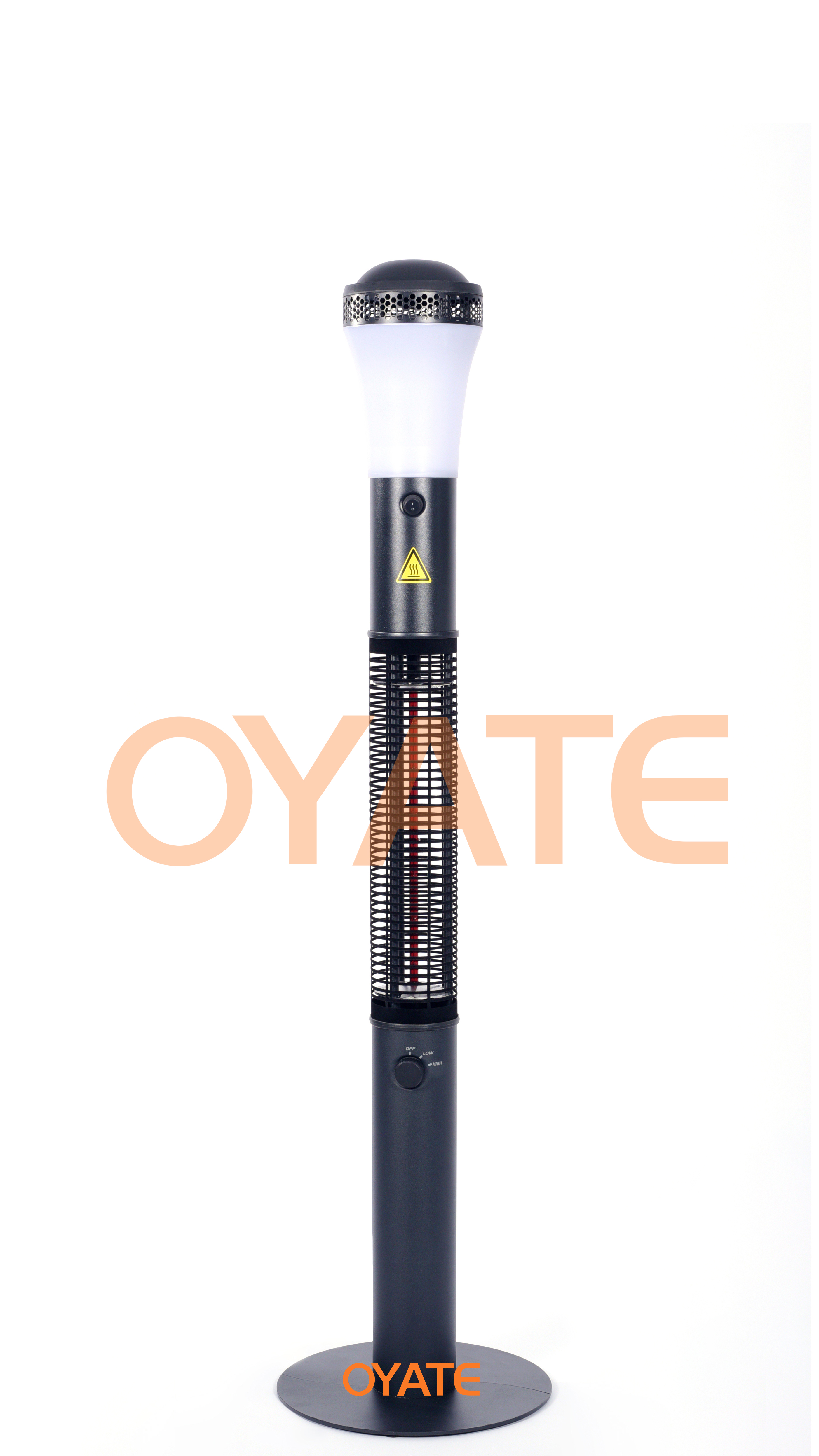
Why we put our bathroom lamps through a “humidity hell”
Let’s be honest: bathrooms are absolute nightmares for electronics. You’ve got steam every morning, random water splashes, and temperature swings that would make a thermostat dizzy. We can’t just build a lamp, slap a label on it, and hope for the best. That’s how you end up with a mountain of returns. Instead, we put every single batch through damp-heat aging tests. Basically, we try to break the lamps so they don’t break in your customer’s house.
The battle against the steam
Here is the real problem. Most of these heaters use quartz glass tubes with tungsten filaments. The glass itself is tough, but the seals—where the electrodes meet the quartz—are the weak spot. In a steamy bathroom, water vapor loves to find its way into those seals. If even a tiny bit of moisture leaks in, oxygen hits that white-hot filament and pop. It’s gone. Instant burnout. To stop this, we lock the lamps in a climate chamber. We crank up the heat and the humidity for hundreds of hours. It’s like a sauna from hell. If there’s a microscopic gap in the seal, it’ll fail in there, not in a customer’s bathroom.
The “Hot-Cold” struggle
Waterproofing isn’t just about keeping droplets out. It’s about how materials move. Think about it: you flip the switch, and the lamp jumps from room temperature to over 600°C in a few seconds. That’s a massive shock. The gaskets and connectors (like the R7s or SK15) expand and contract violently. If the housing is too rigid or doesn’t have room to breathe, things start to crack. We run these lamps through 1,000 thermal cycles. We’re looking for “creep” in the plastic or any rust on the contact pins. We want to know exactly when the materials give up.
The balancing act
You might think, “Why not just make the seals thicker?” Well, there’s a catch. If you seal the unit too tightly, you trap the heat around the base. Suddenly, your wiring is cooking in its own juice, and you risk melting the insulation. It’s a constant trade-off. We have to find that sweet spot where the unit stays bone-dry but still lets enough air through to keep the electronics cool. It takes a lot of tweaking, but it’s the only way to make sure the lamp actually lasts.