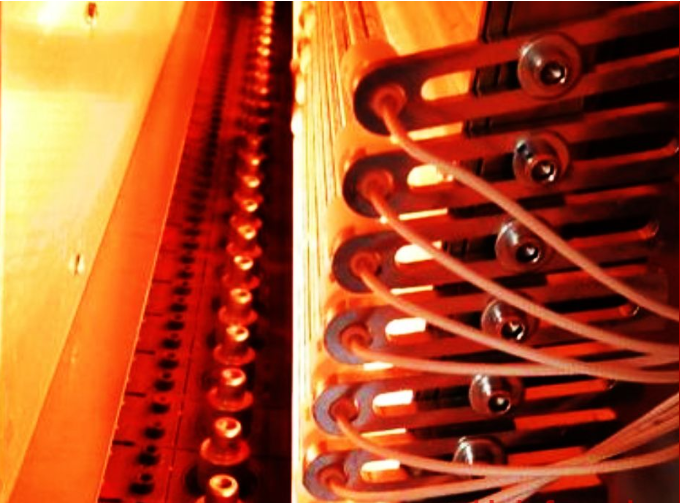
Stop Fighting Your Oven: Getting Your SIPA Blomax Heating Right
If you’ve spent any time running a SIPA Blomax, you know the drill. You’re chasing your tail with the temperature settings, but the bottles just aren’t coming out right. One side is too thin, the other is too thick, and suddenly you’re dealing with failures that slow everything down. The culprit? It’s usually the lamps. When your IR lamps aren’t perfectly matched in power, you get “hot spots” and “cold spots.” It sounds like a small detail, but in a rotary machine, it’s the difference between a smooth shift and a nightmare.
Why “Close Enough” Isn’t Good Enough
A lot of people buy “universal” replacement lamps. On paper, they look fine. But in the real world, a tiny 5% difference in wattage creates a mess across a full oven bank. We do things differently. We build our lamps to hit the OEM power specs exactly. Think of it as a team where everyone is pulling their own weight. No one is lagging behind, and no one is overdoing it. The heat stays uniform across the preform, so you don’t have to guess which lamp is the “weak link” in the bank.
Built for the Grind
These aren’t fragile pieces of glass. We use high-grade quartz because these things take a beating with constant heating and cooling. We also focused on the shortwave spectrum—basically, the specific kind of heat that PET actually likes to absorb. And the best part? They just fit. You don’t need to rewire your housing or mess around with the cabling. You just pop them in and get back to work.
A Quick Pro Tip
These lamps put out a lot of heat to keep your cycle times fast. But here’s the catch: that heat has to go somewhere. If your cooling fans are choked with dust or starting to fail, that ambient heat builds up. It’s a silent killer for your sockets and shortens the life of the lamps. Keep your airflow clean, and your gear will last way longer. Once you swap out those mismatched lamps for a consistent set, the guesswork disappears. You can stop tweaking the knobs and actually hit your production numbers.