


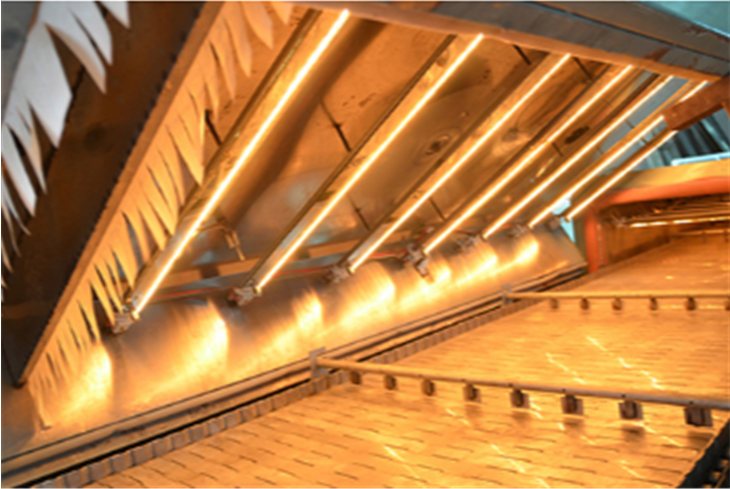
When service doesn’t stop, your oven heat can’t either. One weak cycle and you’re stuck chasing uneven crusts, slow recoveries, and tickets that just keep backing up. The heavy duty ruby heating element was built to keep deck ovens, rotary ovens, and convection units holding steady—shift after shift—with repeatable temperature performance. What’s actually going on under the hood The ruby heating element is a quartz-based infrared emitter, tuned for fast response and stable output. In a commercial oven, that means quick heat-up and tight temperature control, so you can hit consistent bakes without overshooting or waiting around. The heavy duty construction uses thick quartz and reinforced internal supports, which helps it handle thermal shock from constant door openings and repeated cycling. In practice, you get fast recovery after loading, so the baking chamber snaps back to setpoint without dragging. Why this matters in a real kitchen In a high-volume spot, oven uptime is the difference between a smooth service and a costly pileup. This element cuts preheat time, helps even out heat across the stone hearth, and keeps the conditions right for proper caramelization and blister. It also keeps energy use in line by delivering heat on demand, instead of running long recovery burns. The payoff is fewer underdone or overdone items, faster turnaround, and less waste. What you need to get right Match the element to your oven’s mounting, voltage, and watt density—mismatched specs will give you hot spots and shorten its life. Handle it with clean, dry hands, and stick to the manufacturer’s clearances to surrounding metal and insulation. You’ll get the best performance in ovens with good airflow and stable power. Treat it right, and it will carry the heat load when service is pinned wide open.